Radiology & Imaging Technology Career Guide India 2026 — Salary, Scope & Future
India will need 65,000 additional radiology technologists by 2030. AI isn't replacing them — it's multiplying their productivity. Here's what your career, salary, and skills should look like.
The Indian medical imaging market is projected to cross $2.8 billion by 2030 (Frost & Sullivan), driven by an MRI installed base that has grown from 1,200 units in 2015 to over 4,500 in 2025. Every PET-CT scanner, every cath lab, every CT scan, every bedside X-ray needs a skilled radiology technologist to operate it. Behind the AI hype, the reality is that radiology departments are running 24×7 with too few people. If you're weighing B.Sc Radiology & Imaging Technology at JKKN, here is what your career actually looks like — with real data, not prospectus promises.
Why Radiology Is Booming in 2026
Three forces are reshaping radiology in India simultaneously:
- Diagnostic chain expansion — Vijaya Diagnostic, Metropolis, SRL, Krsnaa, Tata 1mg are opening 800+ new imaging centres yearly across tier-2 and tier-3 cities
- Cancer care growth — HCG, Tata Memorial, Apollo Cancer, Cytecare are scaling PET-CT and radiotherapy departments, each needing 4–6 dedicated technologists
- AI integration — Companies like Qure.ai, Niramai, and 5C Network are partnering with hospitals, but AI flags findings — humans still run the scan
The NSDC (National Skill Development Corporation) projects an additional 65,000 radiology technologist positions needed by 2030 — more than triple the current annual graduate output.
Day in the Life of a Radiology Technologist
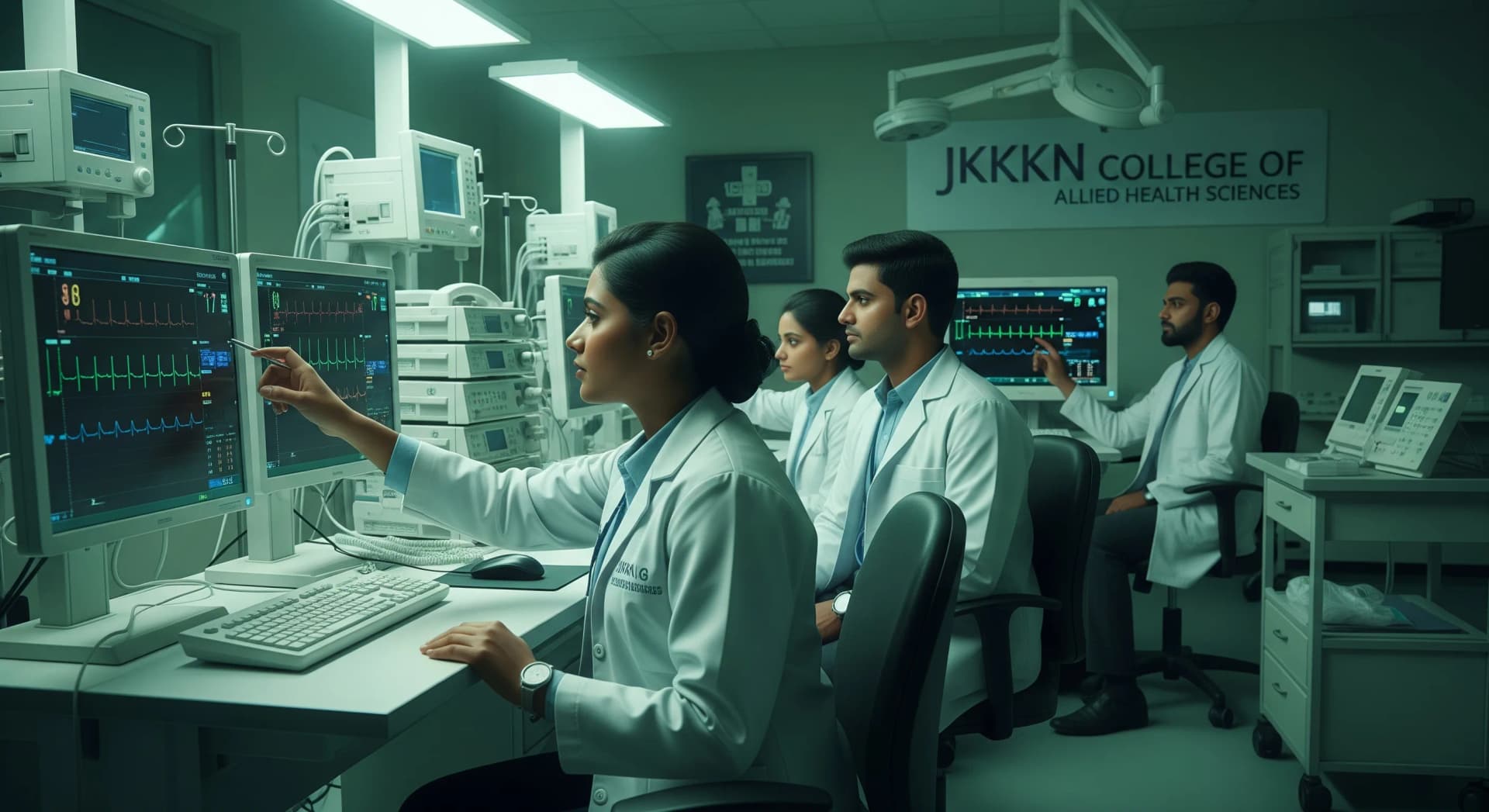
A radiology department in a corporate hospital runs four parallel streams: X-ray & fluoroscopy, CT, MRI, and mammography/ultrasound. As a fresh graduate, you rotate through each.
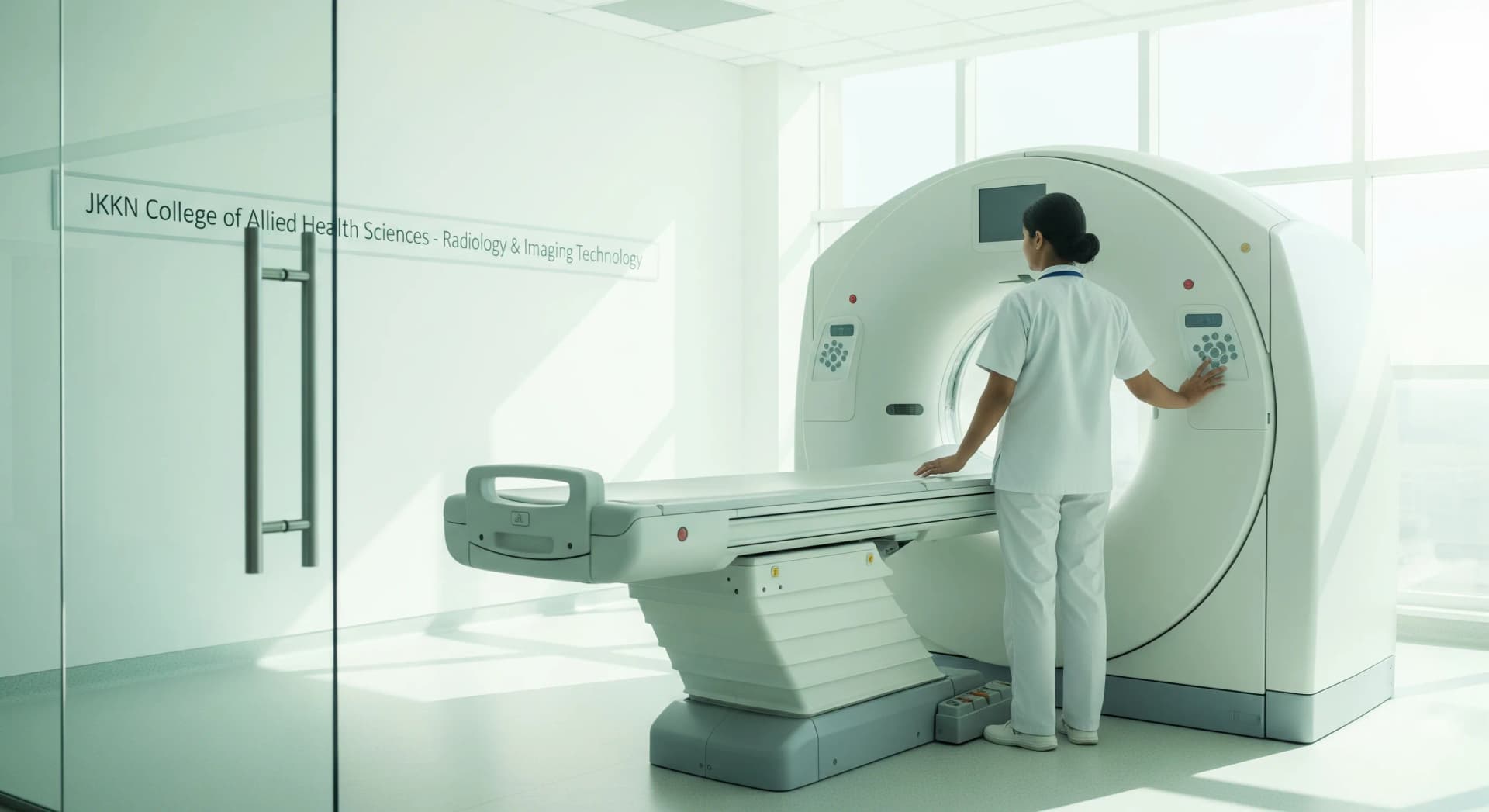
A morning in a busy CT department looks like this: 7 AM machine quality assurance and contrast preparation; 7:30 AM emergency patient (stroke protocol) — 30 minutes start to image transmission to the radiologist; 8 AM onwards, scheduled elective patients (chest CT, abdomen CT, contrast studies); each scan involves patient positioning, parameter optimization, contrast injection, image acquisition, post-processing on the workstation, and uploading to PACS.
Senior technologists also take on protocol design (deciding scan parameters for complex cases), trauma protocol leadership, and training junior staff. The job is technical, fast-paced, and high-stakes — but most radiology technologists love the variety and the constant problem-solving.
Career Paths & Specializations
- MRI Technologist — Most in-demand specialization. Salary premium of 20–35% over general radiography. Sub-specialize in neuro, cardiac, or musculoskeletal MRI for further growth.
- CT Technologist — Trauma centres pay highest. Cardiac CT and CT angiography sub-specializations are particularly well rewarded.
- Interventional Radiology Technologist — Highest paying within radiology. Assist in angioplasties, biopsies, drainage, embolizations.
- PET-CT / Nuclear Medicine Technologist — Niche, well paid, requires additional radiation safety certification.
- Mammography Specialist — Growing rapidly with breast cancer screening programs.
- Radiotherapy / RTT (Radiation Therapy Technologist) — Cancer treatment planning and linac operation. High demand across cancer centres.
- Application Specialist (vendor) — Work with Siemens, GE, Philips, Canon for clinical training. Travel-heavy but lucrative.
Salary Outlook by City Tier
| Experience & Specialization | Tier-1 | Tier-2 |
|---|---|---|
| General radiographer (0–1 years) | ₹2.8 – 4.5 LPA | ₹2.4 – 3.8 LPA |
| CT/MRI technologist (2–4 years) | ₹4.5 – 7.5 LPA | ₹4 – 6 LPA |
| Senior MRI / PET-CT (5–8 years) | ₹8 – 13 LPA | ₹6.5 – 10 LPA |
| Interventional radiology (5+ years) | ₹10 – 16 LPA | ₹8 – 12 LPA |
| Application specialist (vendor) | ₹12 – 24 LPA + travel | — |
Skills, AI Literacy & Certifications
AI is rewriting radiology, but in a way most learners misunderstand. AI reads the image — but acquiring the right image, with correct positioning, contrast timing, and motion artifact control, is purely human. Technologists who learn to quality-check AI output (Qure.ai reports, Annalise, 5C Network) and integrate it into the workflow are paid the most. Recommended certifications:
- ARRT (American Registry of Radiologic Technologists) — Gold-standard credential. Expensive (~₹50,000 +) but opens US, Canada, Gulf doors instantly
- BLS + ACLS — Required for contrast-based procedures
- MRI Safety Certification (MRSO/MRSC) — Differentiator for MRI specialization
- Radiation Safety Officer (RSO) from AERB — Mandatory for nuclear medicine and radiotherapy
- PACS / DICOM workflow training — Most hospitals use Siemens Syngo, GE Centricity, or Philips IntelliSpace
Global Opportunities
- USA — ARRT credential + additional certification. Salary: $65,000–95,000 starting (₹54–80 LPA). MRI specialists earn even more
- UK — HCPC registration + NHS Band 5/6 roles. GBP 28,000–40,000 starting
- Canada — CAMRT registration + provincial licensure. CAD 70,000–95,000 starting
- Australia, New Zealand — AHPRA registration. AUD 75,000–110,000 starting
- Gulf countries — Saudi, UAE, Qatar via DHA/HAAD/Prometric. ₹18–35 LPA + housing + flights + annual leave. Most popular first international move
Why Study at JKKN
- Affiliated with The Tamil Nadu Dr. M.G.R. Medical University, Chennai
- Hands-on training across digital X-ray, CT scanner, 1.5T MRI, ultrasound, and mammography in our teaching hospital
- Industry partnerships with diagnostic chains (Vijaya, Krsnaa, regional imaging centres) for internships and placements
- PACS workflow training using clinical-grade software during semesters 5–6
- Excellent placement record across Chennai, Coimbatore, Salem, Bangalore, and Hyderabad corporate hospitals
- Strong campus infrastructure — imaging learning labs, e-resource learning commons, hostel, and transport
See the full B.Sc Radiology & Imaging Technology learning framework or visit admissions for 2026-27 for eligibility, fee structure, and seat availability.
Frequently Asked Questions
Will AI replace radiology technologists?+
No. AI assists radiologists in image interpretation, but technologists handle patient positioning, machine operation, contrast administration, safety, and image acquisition — none of which AI replaces. AI-literate technologists actually earn more.
What is the salary of a radiology technologist in India?+
Entry-level: ₹2.8–4.5 LPA. Mid-level (3–5 years) with MRI/CT specialization: ₹5–9 LPA. Senior modality specialists (PET-CT, interventional radiology) earn ₹10–16 LPA in tier-1 hospitals.
Which is the highest paying specialization in radiology technology?+
Interventional radiology technologists, PET-CT technologists, and MRI specialists earn the most in India. Cath lab cross-trained radiology technologists are also in very high demand at top corporate hospitals.
Which hospitals hire radiology imaging technology graduates?+
Apollo, Fortis, Medanta, Manipal, KMCH, MIOT, Christian Medical College Vellore, AIIMS, Tata Memorial, HCG Cancer Centres, and diagnostic chains like Vijaya Diagnostic, Metropolis, SRL, and Krsnaa Diagnostics actively hire graduates.
Can radiology technologists work abroad?+
Yes. Australia (AHPRA registration), UK (HCPC + NHS), Canada (CAMRT), USA (ARRT after additional qualification), and Gulf countries hire Indian-trained radiology technologists. Salaries are 3–5× higher than India.
Ready to start your B.Sc Radiology & Imaging Technology journey?
JKKN College of Allied Health Sciences offers state-of-the-art learning labs, clinical training in partner hospitals, and placement support. Admissions for 2026-27 are now open.