Scope of Cardiac Care Technology in India: Career, Salary & Future (2026)
India faces a cardiac care crisis with 4.77 crore CVD patients. Here's why cardiac technologists are in record demand — and what your career, salary, and growth path look like.
India is in the middle of a cardiovascular disease crisis. According to the ICMR-INDIAB study and Lancet 2024 estimates, over 4.77 crore Indians live with cardiovascular disease, and one in four heart attacks now occurs in people under 40. Behind every angioplasty, echocardiogram, and pacemaker implant stands a trained cardiac care technologist — and India is desperately short of them. If you're considering B.Sc Cardiac Care Technology at JKKN College of Allied Health Sciences, this is the most honest, data-led guide you will read in 2026.
Why Cardiac Care Matters in 2026
India performs over 3,50,000 angioplasties and 2,50,000 cardiac surgeries every year — and that figure is rising 12–15% annually. The Lancet Global Burden of Disease report places India as the world's heart attack capital, with cardiovascular disease causing 28% of all deaths nationwide. To handle this demand, hospitals are expanding cath labs and cardiac care units at an unprecedented pace.
The catch? A cath lab without a trained cardiac care technologist is just an expensive room. The Ministry of Health & Family Welfare projects a shortage of 50,000+ cardiac technologists by 2030. Tier-2 cities like Erode, Coimbatore, Salem, Madurai, and Tiruchirappalli are now seeing higher entry-level salaries than tier-1 metros simply because qualified people won't relocate.
Day in the Life of a Cardiac Technologist
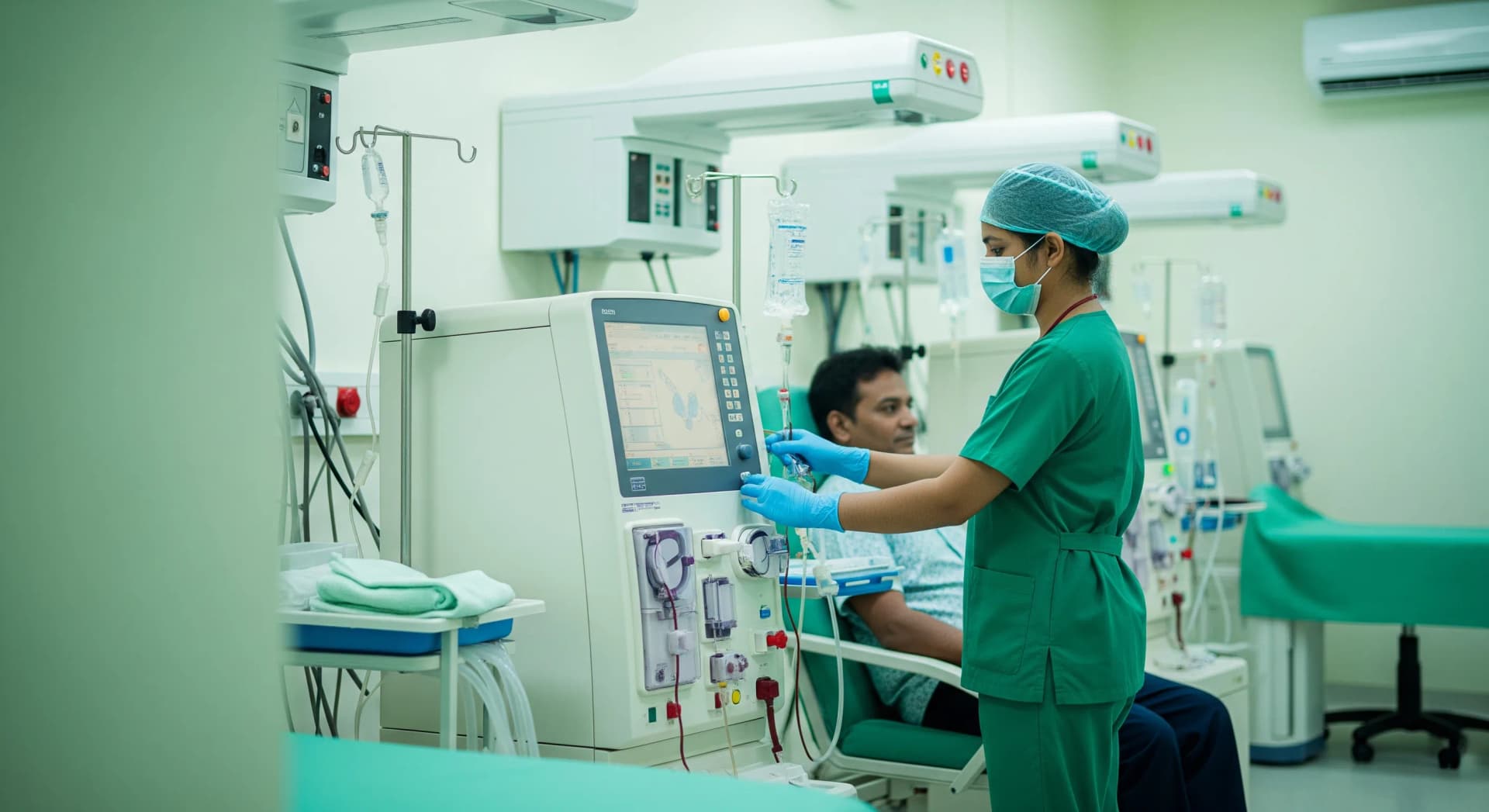
A typical day at a 500-bed multi-specialty hospital starts at 8 AM. You begin with calibrating ECG and echocardiography machines, running quality checks on the cath lab equipment, and reviewing the day's case list. By 9 AM you're positioning patients, applying electrodes for ECG, performing stress tests on treadmills, and running 2D echocardiograms.
From 11 AM onwards, the cath lab kicks in. You assist the interventional cardiologist during diagnostic angiograms, coronary angioplasties, balloon valvuloplasties, and pacemaker implantations. You manage hemodynamic monitoring, contrast injection, and IVUS/FFR procedures. Late afternoon involves Holter monitor analysis, treadmill stress test reports, and documenting findings for the cardiologist's review. Most senior technologists rotate between cath lab, echo lab, and CCU duties weekly — keeping the work varied and constantly skill-stretching.
Career Paths & Specializations
Your B.Sc opens far more than the "ECG technician" role most learners assume. Within 5 years of graduation, you can specialize across several lucrative verticals:
- Cath Lab Technologist — Highest paying entry path. Assist in coronary angiograms, angioplasties, peripheral vascular interventions.
- Echocardiography Technologist — 2D, 3D, transesophageal echo, stress echo. Becoming a Registered Diagnostic Cardiac Sonographer (RDCS) internationally triples salary potential.
- Electrophysiology Technologist — Pacemaker, ICD, CRT-D implants, EP studies, ablations. Cutting-edge and well-compensated.
- Cardiac CCU / ICCU Technologist — Hemodynamic monitoring, IABP, ECMO support, post-cardiac-surgery recovery.
- Perfusionist (with PG) — Operates the heart-lung machine during open heart surgery. Among the highest-paid allied health roles.
- Clinical Application Specialist — Work with cardiac device companies (Medtronic, Abbott, Boston Scientific) training hospital staff.
Salary Outlook in India
Real salaries from Apollo, Fortis, Medanta, KMCH, and MIOT hospital postings as of mid-2026:
| Experience Level | Tier-1 (Chennai, Bangalore, Mumbai) | Tier-2 (Coimbatore, Erode, Salem) |
|---|---|---|
| Entry (0–1 years) | ₹2.4 – 4.2 LPA | ₹2.0 – 3.6 LPA |
| Mid (3–5 years) | ₹5 – 8 LPA | ₹4 – 6.5 LPA |
| Senior cath lab tech (8+ years) | ₹10 – 18 LPA | ₹8 – 13 LPA |
| Cardiac device specialist | ₹12 – 24 LPA + variable | — |
Bonus & shift differentials add 15–25% in corporate hospitals. Government hospitals (CHC, AIIMS, ESI) offer lower base but excellent job security and 7th-pay-commission revisions.
Skills & Certifications That Multiply Your Value
Three certifications will materially shift your earning trajectory in the first five years of practice:
- ACLS (Advanced Cardiac Life Support) from the American Heart Association — virtually mandatory in corporate hospitals. Cost: around ₹14,000. ROI: massive.
- RDCS (Registered Diagnostic Cardiac Sonographer) from ARDMS — pricey (~₹40,000+) but opens US/Gulf doors and adds ₹2–3 LPA in India.
- BSI Cath Lab Certification or a vendor-led course (Medtronic, Abbott) — adds device expertise that hospitals pay a premium for.
Soft-skill multipliers: tutored fluency in patient communication (especially Tamil/Hindi/English for trauma cases), comfort with EMR systems (Cerner, Epic, SmartCare), and basic statistics for research participation. Many of our graduates co-author hospital research papers within 2 years — a CV differentiator most freshers never tap.
Global Opportunities
Indian-trained cardiac technologists are highly preferred across the Gulf, UK, and Australia. Common pathways:
- UAE, Saudi Arabia, Qatar, Kuwait, Oman — DHA, HAAD, Prometric, or MOH exams. Average salary: ₹12–28 LPA + housing + flights. Most popular first international move.
- United Kingdom — Cardiac Physiologist roles via NHS. Requires IELTS 7.0 + Registration Council for Clinical Physiologists (RCCP). Starting salary: GBP 28,000–35,000 (₹30–38 LPA).
- Australia — Cardiac Sonographer roles via AHPRA-equivalent assessment. AUD 75,000–110,000 starting.
- Singapore, Malaysia — Direct hospital recruitment, especially for echo and cath lab technologists.
Why Study at JKKN
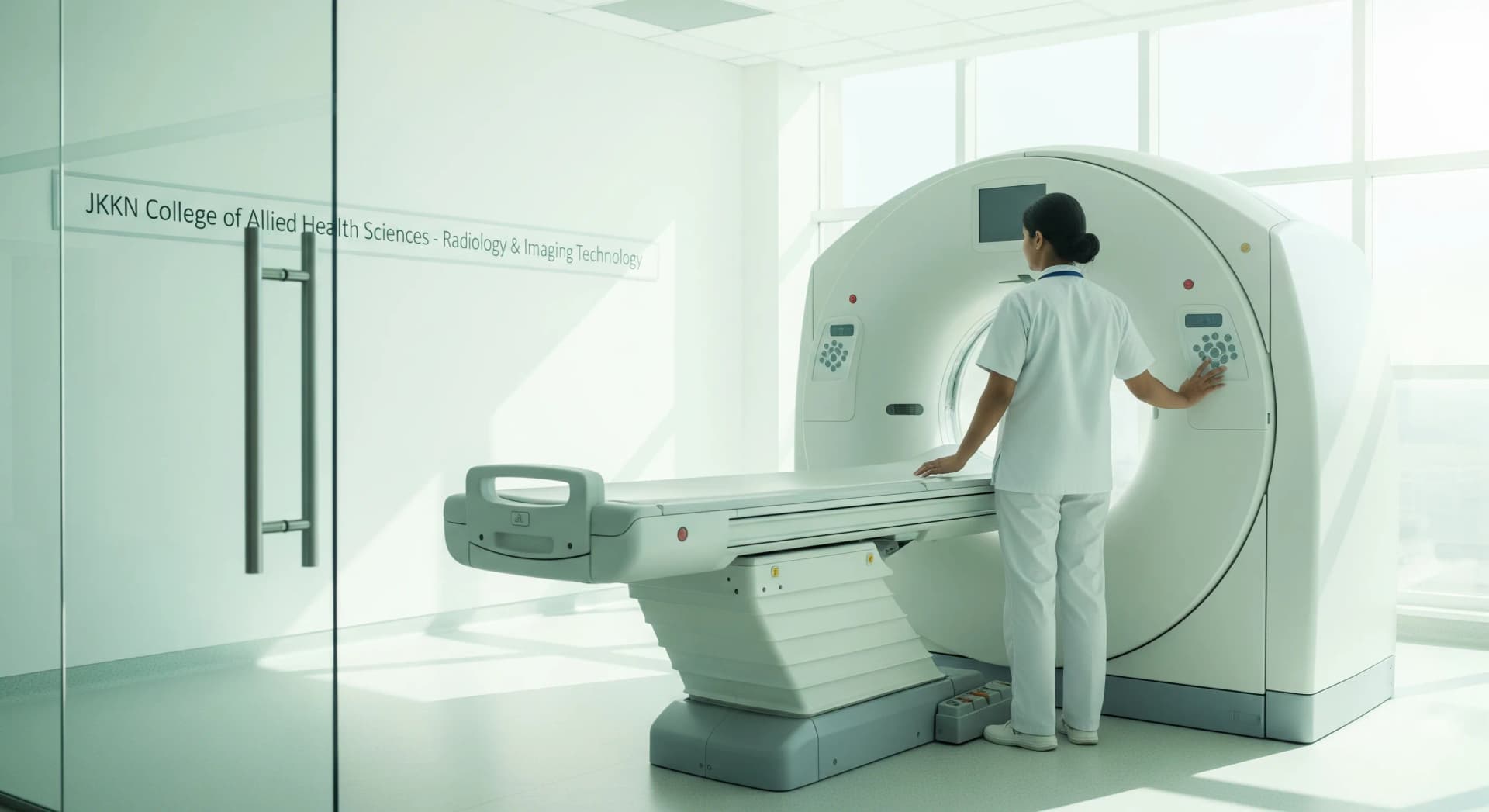
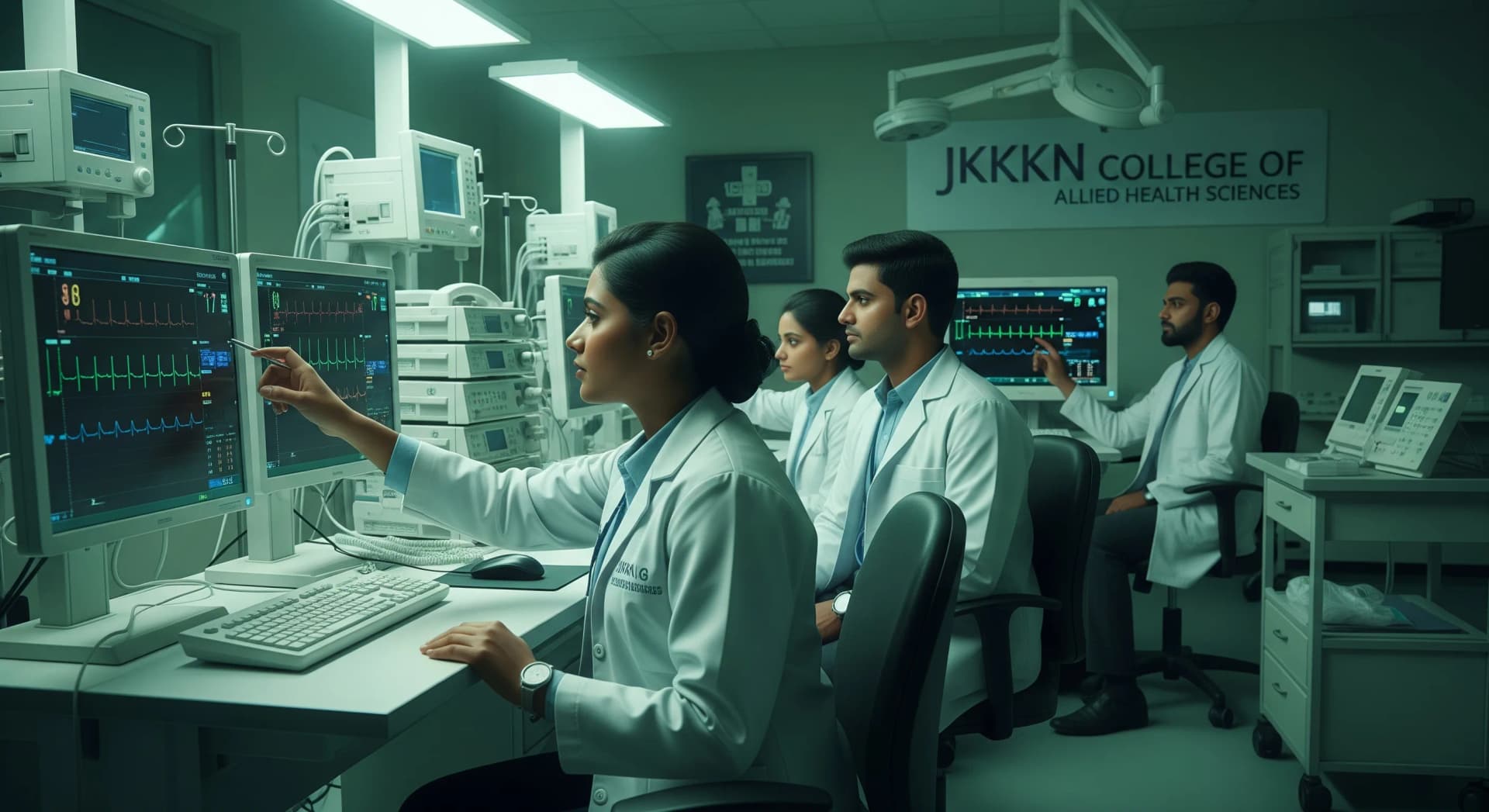
JKKN College of Allied Health Sciences runs B.Sc Cardiac Care Technology with clinical training at a 1,200-bed multi-specialty teaching hospital, equipped with 2 cath labs, 4D echocardiography, EP lab, and a dedicated CCU. Specifically:
- Affiliated with The Tamil Nadu Dr. M.G.R. Medical University, Chennai — recognised by every Indian hospital and international registration body
- Hands-on cath lab rotations starting from semester 3, not just final-year observation
- Industry partnerships with cardiac device companies for OEM training and placement
- placement record in 2025, with average package ₹3.4 LPA for fresh graduates
- Access to advanced simulation learning labs, medical learning commons, and on-campus hostel
Explore the full B.Sc Cardiac Care Technology learning framework or jump to admissions for 2026-27 with eligibility, fee structure, and seat availability.
Frequently Asked Questions
Is cardiac care technology a good career in India?+
Yes. With over 4.77 crore cardiovascular disease patients in India and a severe shortage of trained cardiac technologists, the demand outpaces supply in every tier-1 and tier-2 city. Entry-level salaries start at ₹2.4–4.2 LPA and reach ₹8–14 LPA with 5+ years of experience.
What does a cardiac technologist do?+
Cardiac technologists perform ECGs, echocardiograms, stress tests, Holter monitoring, and assist cardiologists during angiograms, angioplasties, and pacemaker implantations in the cath lab. They are central to diagnosing and treating heart disease.
What is the salary of a cardiac technologist in India?+
Entry-level: ₹2.4–4.2 LPA in tier-1 hospitals. Mid-level (3–5 years): ₹5–8 LPA. Senior cath lab technologists with 8+ years and cardiology fellowship certifications earn ₹10–18 LPA. Gulf and UK roles can pay 2–3× Indian salaries.
Which hospitals hire BSc Cardiac Technology graduates?+
Apollo Hospitals, Fortis, Medanta, Narayana Health, MIOT International, KMCH, Manipal Hospitals, Christian Medical College Vellore, AIIMS, and government cardiac centres regularly recruit cardiac technology graduates across India.
Can I work abroad with a BSc in Cardiac Care Technology?+
Yes. UK (after IELTS + NHS registration), Gulf countries (DHA/HAAD/Prometric exams), Australia, and Canada hire Indian-trained cardiac technologists. Pay is typically 2.5–4× Indian salaries depending on country and experience.
Ready to start your B.Sc Cardiac Care Technology journey?
JKKN College of Allied Health Sciences offers state-of-the-art learning labs, clinical training in partner hospitals, and placement support. Admissions for 2026-27 are now open.