Future of Dialysis Technology in India: Why 2026 Is the Best Time to Start
Over 2.2 lakh Indians develop end-stage kidney disease every year, but only 30% receive dialysis. The math makes dialysis technology one of the safest healthcare careers of this decade.
Over 2.2 lakh Indians develop end-stage renal disease (ESRD) every year, according to the Indian Society of Nephrology. Yet only 30% ever receive dialysis — primarily because India has fewer than 12,000 trained dialysis technicians for a country that needs at least 40,000. The Pradhan Mantri National Dialysis Programme (PMNDP) and private chains like NephroPlus, B. Braun Avitum, DaVita, and Apex Kidney Care are scaling at a pace that classroom training simply isn't keeping up with. If you're thinking about B.Sc Renal Dialysis Technology, here's the unvarnished career picture for 2026.
Why Dialysis Demand Is Exploding
India has the world's second-highest diabetes burden (10.13 crore diabetics, ICMR-INDIAB 2023) and one of the highest hypertension rates. Both are irreversible drivers of chronic kidney disease (CKD). The trajectory is brutal and predictable:
- 17% of urban Indians now have some stage of CKD (AIIMS-led CKD cohort study)
- PMNDP has scaled to 1,800+ dialysis centres in 700 districts, each needing 6–10 dialysis technicians
- Tamil Nadu alone added 245 new dialysis chairs in 2024–25 across government and private sectors
- The dialysis services market in India is projected to grow from $1.5 billion (2024) to $3.2 billion by 2030
Translation: every district headquarters in India needs more dialysis technologists than it can hire. Job security in this field is, frankly, unmatched in allied health.
Day in the Life of a Dialysis Technologist
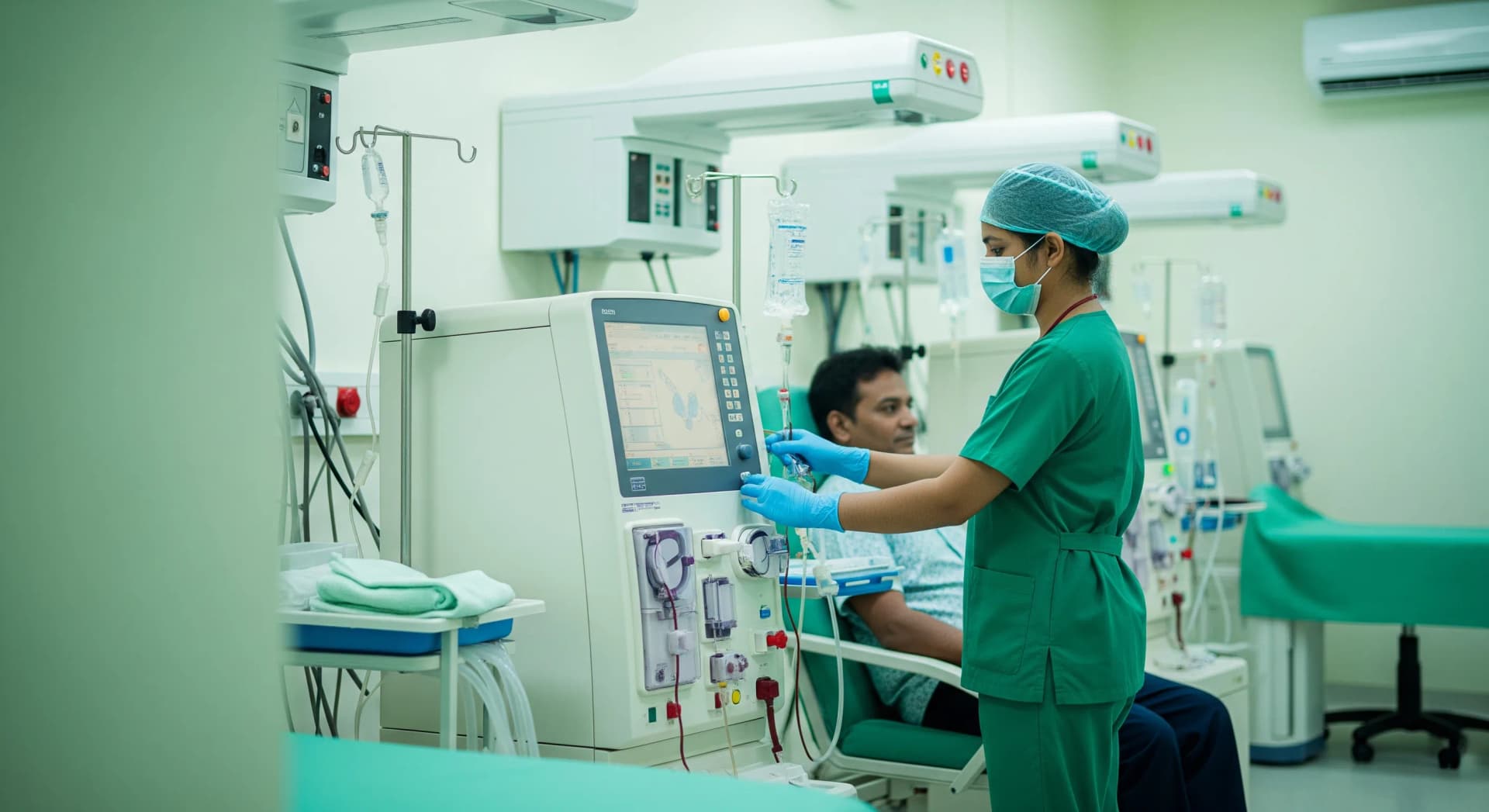
A typical 12-chair dialysis unit runs three 4-hour shifts a day. As a dialysis technologist, your morning starts with priming machines, checking the reverse osmosis water treatment system (the critical safety check most outsiders underestimate), and preparing the dialyzers.
Patient arrival begins by 7 AM. You weigh patients pre- and post-dialysis, access their AV fistula or central line, initiate the dialysis session, monitor vitals every 30 minutes, troubleshoot alarms (pressure drops, blood leaks, coagulation), administer prescribed heparin and erythropoietin, and document every shift change. Between sessions, you reprocess dialyzers, run bacteriological cultures on water samples, and prepare the next batch.
Most patients come 3× a week — meaning you build deep relationships and become a critical emotional anchor. The work is technical, but the human side is what most senior dialysis technologists say keeps them going.
Career Paths & Specializations
- Hemodialysis Technologist — Core role. Most common entry path in hospitals and standalone dialysis centres.
- Peritoneal Dialysis (PD) Specialist — Specialized PD training (Baxter PD certification adds significant value). Niche but well paid.
- CRRT Specialist (Continuous Renal Replacement Therapy) — Practiced in ICU settings. Highest paying specialization within dialysis.
- Dialysis Unit In-Charge — After 4–6 years, manage technician teams, water treatment systems, infection control, and procurement.
- Clinical Application Specialist — Join Fresenius, B. Braun, Baxter, NephroPlus as technical trainers. Lucrative + great work-life balance.
- Transplant Coordinator — Hospital-based, working between nephrology, surgery, and patient families. Excellent long-term growth.
Salary Outlook in India
| Experience Level | Tier-1 Hospitals | Dialysis Chains (PAN India) |
|---|---|---|
| Entry (0–1 years) | ₹2.4 – 3.8 LPA | ₹2.2 – 3.6 LPA |
| Mid (3–5 years) | ₹4.5 – 7 LPA | ₹4.2 – 6.5 LPA |
| Senior / Unit In-Charge | ₹7 – 11 LPA | ₹6.5 – 10 LPA |
| CRRT Specialist (ICU) | ₹8 – 13 LPA | — |
| Clinical Specialist (vendor) | ₹10 – 18 LPA + variable | — |
Most dialysis chains pay shift differentials (15–25%) for evening and night shifts. Smaller centres in Tamil Nadu often add accommodation + meals on top of base salary for relocators.
Skills & Certifications That Multiply Your Value
- BLS + ACLS (American Heart Association) — Standard expectation across corporate dialysis chains.
- Water Treatment & RO System Certification — Often the difference between technician and senior technician. The RO system is the most critical safety component in any unit.
- Infection Control Certification — Hepatitis B, C, HIV protocols. NABH-accredited centres explicitly prefer certified staff.
- CRRT Training — Vendor-led (Baxter Prismaflex, Fresenius Multifiltrate). Opens ICU roles paying 30–40% more than chair-side dialysis.
Mid-career upgrades that work: MSc Renal Sciences or MHA (Hospital Administration) → opens nephrology unit management and quality compliance roles at NABH-accredited centres.
Global Opportunities
Indian dialysis technologists are in extreme demand across the Gulf, where dialysis chain expansion mirrors India's growth. Common pathways:
- UAE, Saudi Arabia, Qatar, Oman, Bahrain — DHA, HAAD, Prometric, SCFHS exams. Salary: ₹15–28 LPA + housing + flights + annual leave. NephroPlus, DaVita, Fresenius are major Gulf employers of Indian techs.
- United Kingdom — NHS Band 5/6 Renal Technologist roles. IELTS + UK qualification recognition needed. Starting salary: GBP 28,407–34,581.
- Australia, New Zealand — Renal Technologist roles through AHPRA assessment. AUD 70,000–95,000 starting.
Why Study at JKKN
JKKN's B.Sc Renal Dialysis Technology is structured for direct hospital deployment from day one. Highlights:
- Affiliated with The Tamil Nadu Dr. M.G.R. Medical University, Chennai
- Clinical rotations across hemodialysis, peritoneal dialysis, CRRT, and water treatment systems
- Partnered with NephroPlus and regional dialysis chains for placements and internships
- Hands-on lab training on Fresenius and B. Braun machines — the same brands used in 80%+ of Indian dialysis chains
- Strong placement support and on-campus hostel, transport, and advanced learning labs
Read the full B.Sc Renal Dialysis Technology learning framework or visit admissions for 2026-27 for eligibility, fees, and the application process.
Frequently Asked Questions
Is dialysis technology a good career in India?+
Yes. India has fewer than 12,000 trained dialysis technicians for over 2 lakh new patients each year. Even rural Tamil Nadu, Kerala, and Andhra Pradesh dialysis chains are short-staffed. Job security and salary growth are exceptional.
What does a dialysis technologist do?+
They set up and operate hemodialysis machines, prepare patients, monitor vitals during 4-hour sessions, manage water treatment systems, troubleshoot alarms, document patient response, and assist nephrologists during peritoneal and CRRT procedures.
What is the salary of a dialysis technologist?+
Entry-level: ₹2.2–3.6 LPA in private dialysis chains. Mid-level (3–5 years): ₹4.2–6.5 LPA. Senior dialysis in-charge or unit manager roles touch ₹7–11 LPA. Gulf jobs pay ₹12–22 LPA depending on country and experience.
Which companies hire dialysis technologists in India?+
NephroPlus, B. Braun Avitum, DaVita, Apex Kidney Care, Fresenius Medical Care, Apollo Dialysis, Manipal Hospitals, and government hospitals under PMNDP (Pradhan Mantri National Dialysis Programme) hire actively across India.
Can a dialysis technologist work abroad?+
Yes. UAE, Saudi Arabia, Qatar, Kuwait, Oman, and the UK regularly recruit dialysis technologists. You will need Prometric/DHA/HAAD or NHS-equivalent registration. Indian-trained dialysis technicians are highly preferred in the Gulf.
Ready to start your B.Sc Renal Dialysis Technology journey?
JKKN College of Allied Health Sciences offers state-of-the-art learning labs, clinical training in partner hospitals, and placement support. Admissions for 2026-27 are now open.