Future of Critical Care Technology in India: Career, Salary & Scope (2026)
Every 100 ICU beds need 8–10 trained critical care technologists. India has fewer than 10,000 of them for 95,000+ ICU beds. The gap defines opportunity.
India has 95,000+ ICU beds and fewer than 10,000 trained critical care technologists. This is the most lopsided supply-demand ratio of any allied health career in the country. Behind every ECMO patient, every code blue, every CRRT setup, sits a critical care technologist whose technical decisions help save lives. If you're considering B.Sc Critical Care Technology at JKKN, here's what your career, salary, and growth trajectory actually look like in 2026.
ICU Expansion & The Talent Shortage
The Indian critical care market has grown 18% CAGR since 2021. Drivers:
- Post-COVID infrastructure investment — Most multi-specialty hospitals doubled or tripled ICU capacity
- Rapid expansion of cardiac, neuro, transplant, and trauma ICUs across Apollo, Fortis, Manipal, Medanta, KMCH chains
- ECMO program growth — Now offered at 50+ Indian hospitals (up from 12 in 2018) requiring dedicated specialists
- NABH 5th edition — Mandates trained critical care technician staffing ratios in accredited ICUs
- Insurance penetration — Ayushman Bharat and private insurance driving ICU admissions in tier-2 and tier-3 cities
ISCCM (Indian Society of Critical Care Medicine) recommends 1 critical care technologist per 6 ICU beds. India is currently running closer to 1 per 12. Every graduating batch is absorbed before convocation.
Day in the Life of a Critical Care Technologist
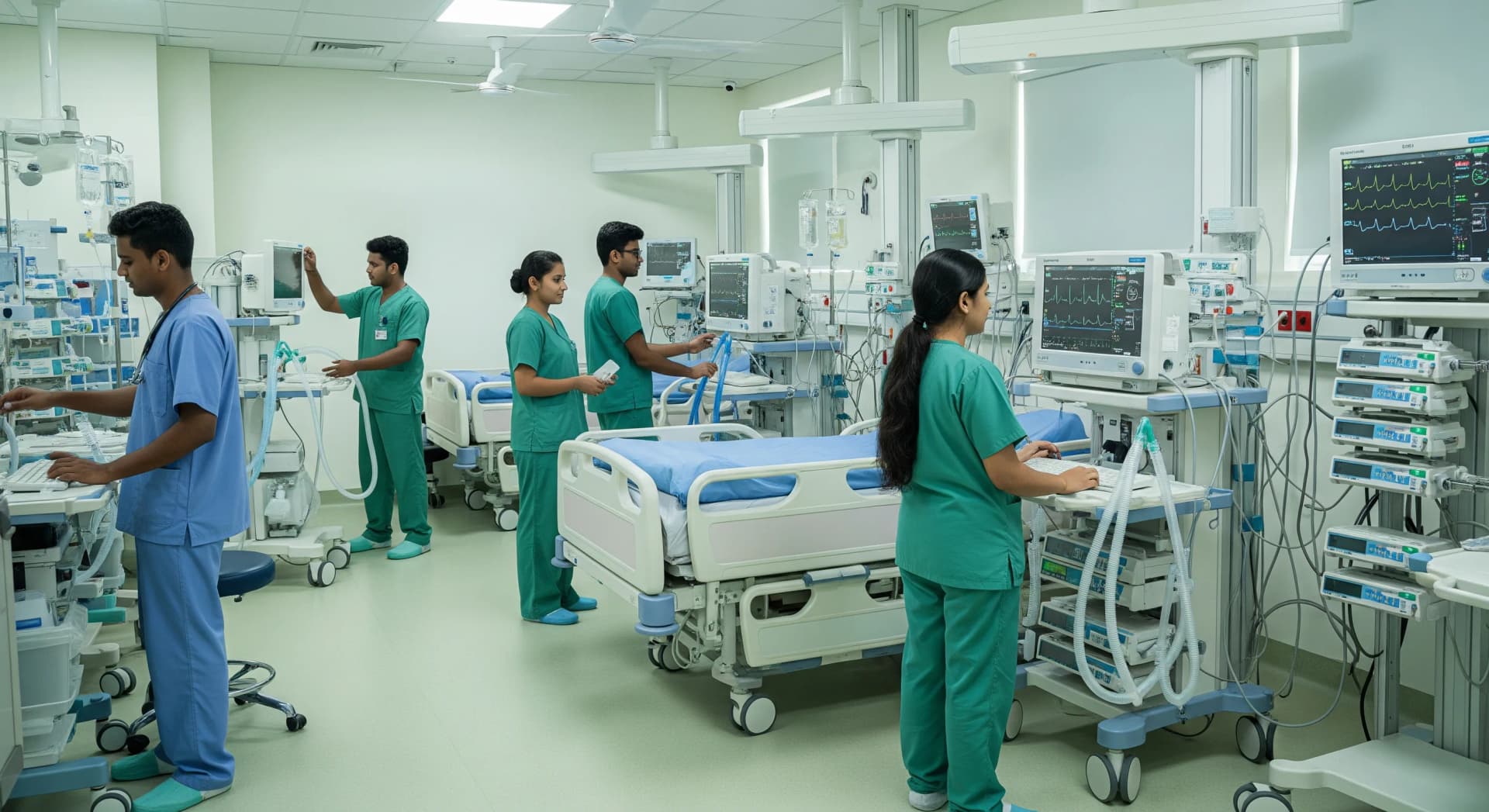
A 30-bed ICU runs 24×7 across three shifts. As a critical care technologist on morning shift (7 AM – 3 PM), you start with a handoff round — receiving status on each ventilated patient, IABP/ECMO setups, and CRRT circuits.
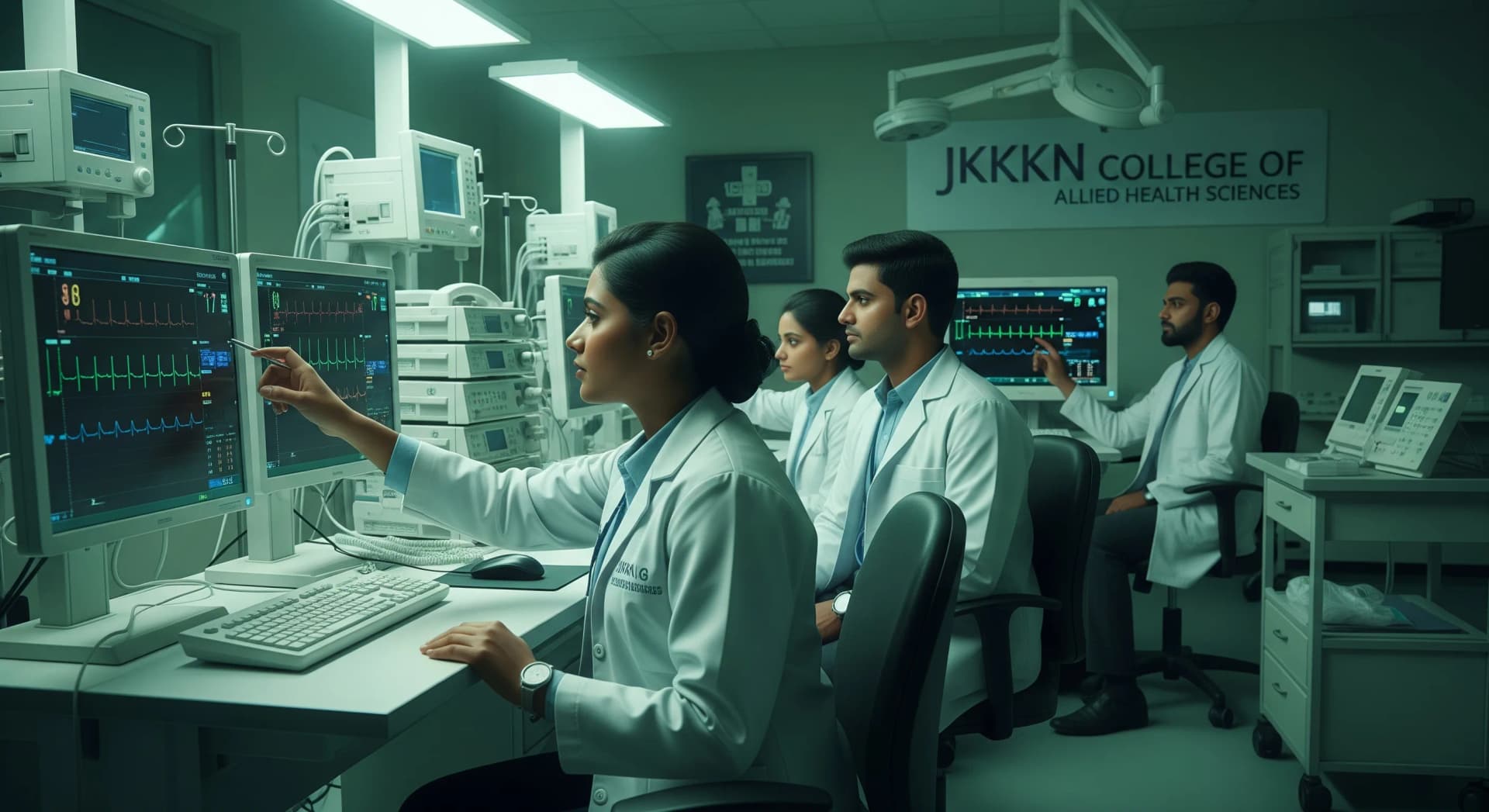
Through the morning you manage ventilator parameter changes (based on intensivist orders and ABG results), assist with central line insertions, run bedside ABG analysis, perform suctioning and chest physiotherapy, calibrate multi-parameter monitors, manage infusion pumps, and document hemodynamic readings every 2 hours.
During emergencies you are central to the code blue team — managing the defibrillator, preparing emergency drugs, assisting with intubation. On any given week, you might also assist with bronchoscopy, percutaneous tracheostomy, CRRT initiation, and ECMO management. Most senior critical care techs say the emotional density of the work — celebrating successful weaning, supporting families through end-of-life decisions — is what defines the career.
Career Paths & Specializations
- Multi-Specialty ICU Technologist — Core entry path. Builds broad-spectrum critical care exposure
- Cardiac ICU (CTICU) Technologist — Post-cardiac-surgery recovery, IABP, ECMO. Highest paying within critical care
- Neuro ICU Technologist — ICP monitoring, EEG monitoring, stroke and traumatic brain injury management
- Transplant ICU Specialist — Post-liver, kidney, heart transplant recovery management
- Paediatric / Neonatal ICU Technologist — Specialized, smaller talent pool, well compensated
- ECMO Specialist — Extracorporeal life support is the most advanced technology in any ICU. ECMO specialists earn the highest in this field. Less than 500 ECMO-trained technologists nationwide as of 2025
- Quality & Compliance Lead — NABH/JCI critical care quality programs. Move into hospital quality leadership tracks
Salary Outlook in India
| Experience Level | Tier-1 Corporate | Tier-2 Hospitals |
|---|---|---|
| Entry (0–1 years) | ₹2.6 – 4.2 LPA | ₹2.4 – 3.6 LPA |
| Mid (3–5 years) | ₹5 – 8 LPA | ₹4.5 – 7 LPA |
| Senior CCT (5–8 years) | ₹8 – 13 LPA | ₹6.5 – 10 LPA |
| Cardiac ICU / Neuro ICU specialist | ₹9 – 15 LPA | — |
| ECMO Specialist | ₹12 – 22 LPA | — |
Skills & Certifications That Multiply Your Value
- BLS + ACLS — Standard
- FCCS (Fundamental Critical Care Support) from SCCM — Universally recognized
- BASIC (Basic Assessment and Support in Intensive Care) — ISCCM endorsed
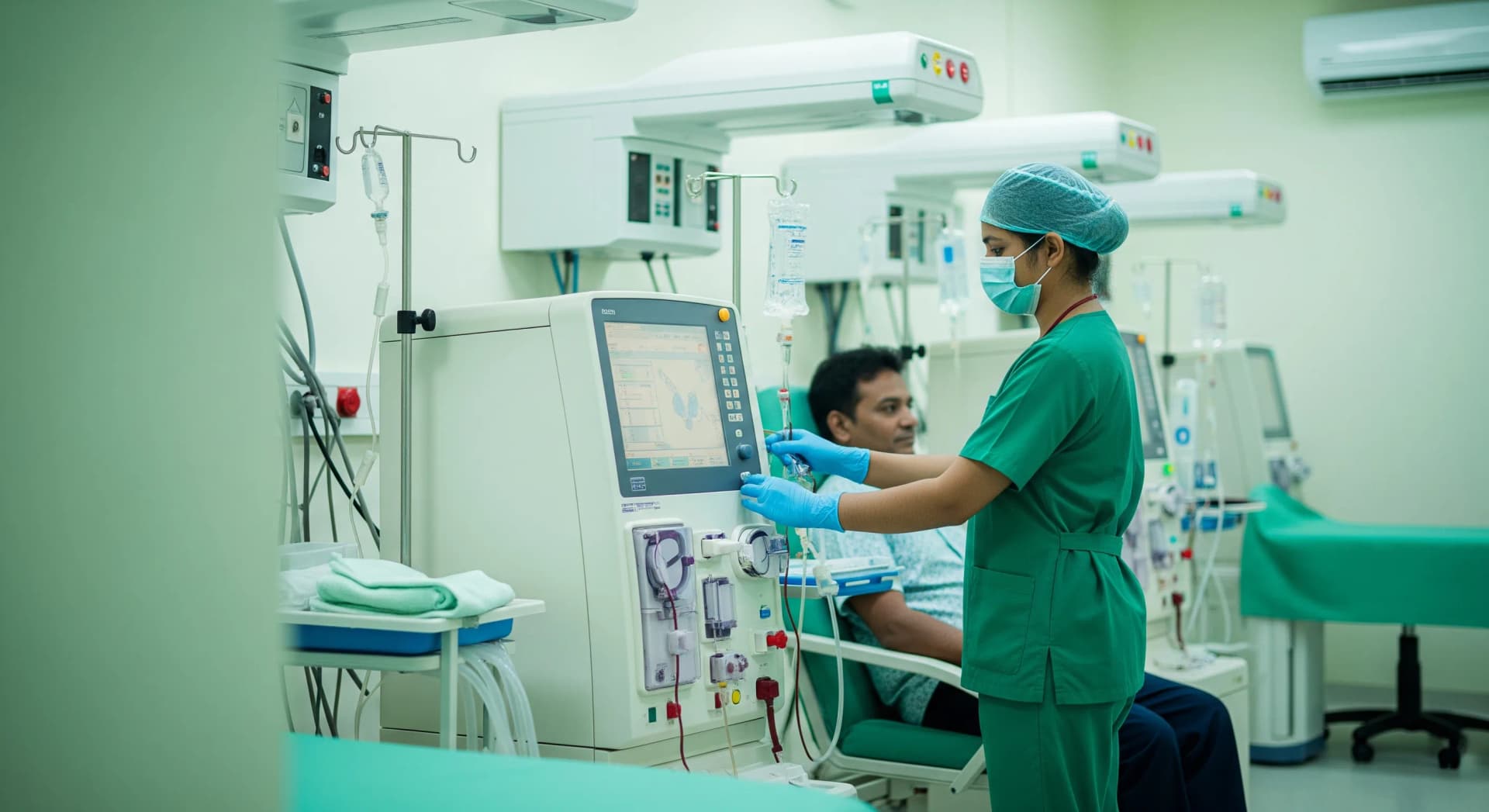
- CRRT certification — Vendor-led (Baxter Prismaflex, Fresenius Multifiltrate, NxStage). Opens ICU dialysis roles
- ECMO Specialist training (ELSO) — Most lucrative sub-specialty certification in critical care
- Ventilator manufacturer training — Hamilton, Drager, Maquet provide vendor courses
Global Opportunities
- Gulf countries — Saudi, UAE, Qatar, Kuwait, Oman — most accessible international move. DHA/HAAD/Prometric/SCFHS exams. Salary: ₹15–28 LPA + housing + flights
- UK — Critical Care Practitioner / Advanced Clinical Practice roles via NHS. IELTS + skill assessment. GBP 28,000–40,000 starting
- Australia & New Zealand — Critical Care Technician roles via AHPRA. AUD 75,000–110,000 starting
- Ireland — Strong demand for ICU technicians via CORU registration
- USA — Indian CCT degree alone not directly recognized; most aspirants pursue NBRC RT route, then sub-specialize in critical care
Why Study at JKKN
- Affiliated with The Tamil Nadu Dr. M.G.R. Medical University, Chennai
- Clinical rotations across multi-specialty ICU, CTICU, neuro ICU, and NICU/PICU in our teaching hospital
- Hands-on training with ventilators, CRRT machines, IABP, multi-parameter monitors used in 90% of Indian ICUs
- Senior learners include practicing intensivists and senior critical care nurses
- Strong placement record across Apollo, Fortis, KMCH, MIOT, Manipal critical care departments
- Excellent campus infrastructure — simulation learning labs, digital learning commons, on-campus hostel
Read the full B.Sc Critical Care Technology learning framework or visit admissions for 2026-27.
Frequently Asked Questions
What is the scope of critical care technology in India?+
Excellent. India has 95,000+ ICU beds and fewer than 10,000 trained critical care technologists. Every multi-specialty hospital, cardiac centre, neonatal ICU, and trauma centre actively hires graduates.
What does a critical care technologist do?+
They manage ventilators, multi-parameter monitors, CRRT (continuous renal replacement therapy), defibrillators, ECMO, intra-aortic balloon pumps, and assist intensivists in code blue, intubation, and life-support procedures.
What is the salary of a critical care technologist?+
Entry-level: ₹2.6–4.2 LPA. Mid-level (3–5 years): ₹5–8 LPA. Senior critical care technologists with ECMO, CRRT specialization: ₹9–15 LPA in tier-1 hospitals. Gulf and SEA hospitals pay 2–3× more.
Is critical care technology different from BSc Nursing?+
Yes. Critical care technologists focus exclusively on advanced life support equipment, monitoring, and procedures in ICU/CCU. They are technical specialists, while nurses handle holistic patient care. Both roles are essential and complementary.
Can I work abroad with a BSc Critical Care Technology?+
Yes. Gulf countries (Saudi, UAE, Qatar, Kuwait, Oman) actively hire critical care technologists. UK, Ireland, and Australia also recognize the qualification after additional registration. Pay is 2.5–4× Indian salaries.
Ready to start your B.Sc Critical Care Technology journey?
JKKN College of Allied Health Sciences offers state-of-the-art learning labs, clinical training in partner hospitals, and placement support. Admissions for 2026-27 are now open.