Accident & Emergency Care Technology Career Guide India 2026
India has 4.5 lakh road accident victims a year but fewer than 15,000 trained emergency care technologists. The Modi government's trauma care expansion is creating thousands of new roles.
India loses 4.5 lakh people to road accidents every year — the highest absolute number in the world (NCRB 2024). Half of these deaths happen in the "golden hour" between injury and definitive care. Behind every saved life is an emergency care technologist who triaged, stabilised, and transported the patient. Yet India has fewer than 15,000 trained emergency care technologists for a country that needs at least 100,000. If you're considering B.Sc Accident & Emergency Care Technology at JKKN, here's what the career, daily work, and growth path actually look like.
Trauma Care Expansion in India
Three structural shifts are creating massive demand:
- National Trauma Care Programme — Government is funding Level 1 and Level 2 trauma centres at every district hospital and AIIMS facility. Each centre needs 12–20 trained emergency care staff
- 108 ambulance expansion — GVK EMRI, Ziqitza, and state ambulance services now operate over 30,000 ambulances nationwide, each needing paramedic-grade staff
- Corporate ER expansion — Apollo, Fortis, Medanta, KMCH, MIOT have all transformed their emergency departments into 24×7 trauma-ready centres requiring trained emergency care technologists
- Air ambulance services — Companies like ICATT, Aviation Medicine, and Medulance hire trained emergency care personnel for high-acuity inter-hospital transfers
- Disaster response & oil-rig medical services — Indian emergency care techs are hired by global oil/gas and disaster response organisations
Day in the Life of an Emergency Care Technologist
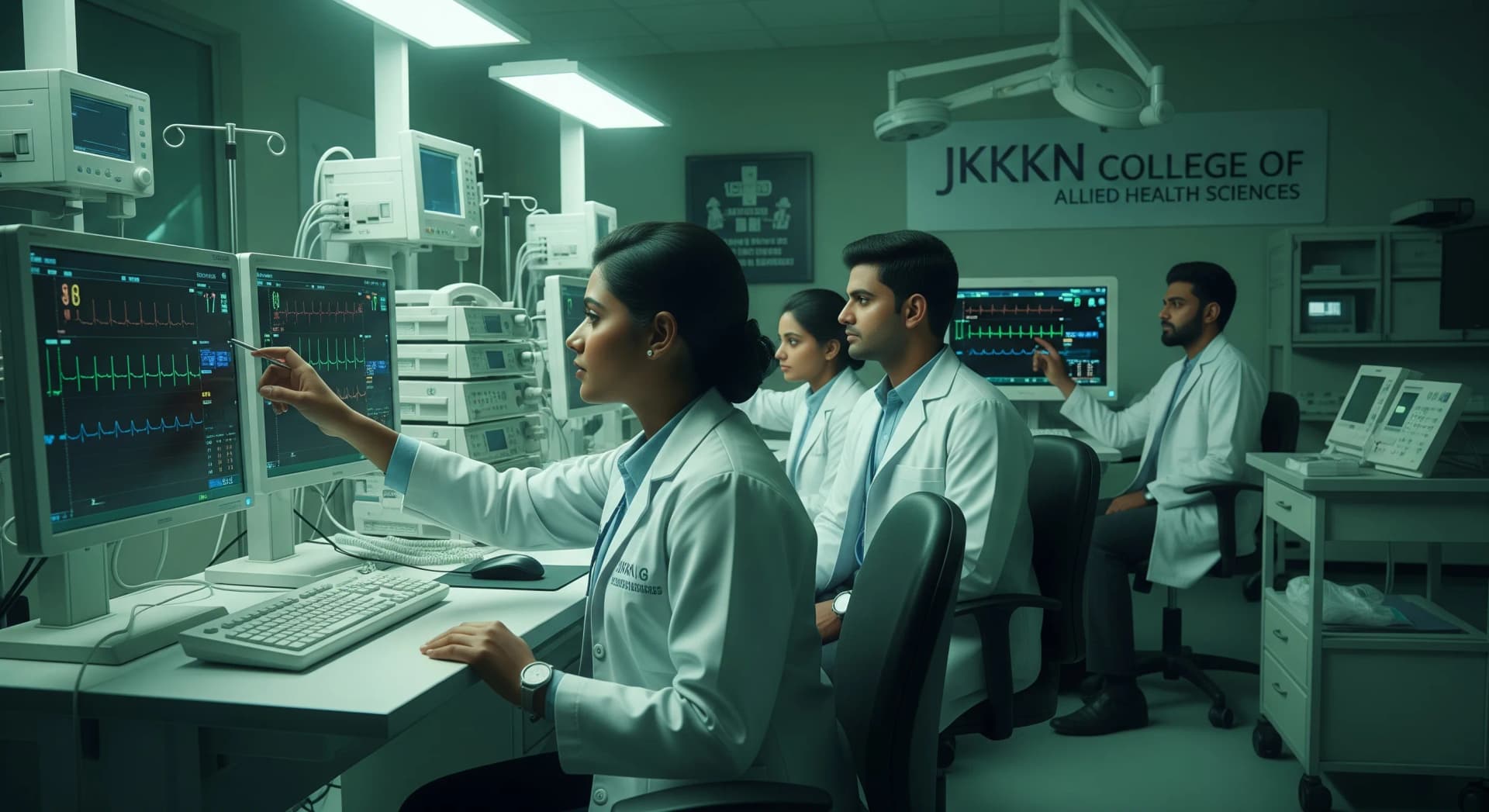
A multi-specialty hospital ER runs four parallel zones: triage, resuscitation bay, observation, and minor procedure. Your morning shift (7 AM – 3 PM) starts with handover from the night team.
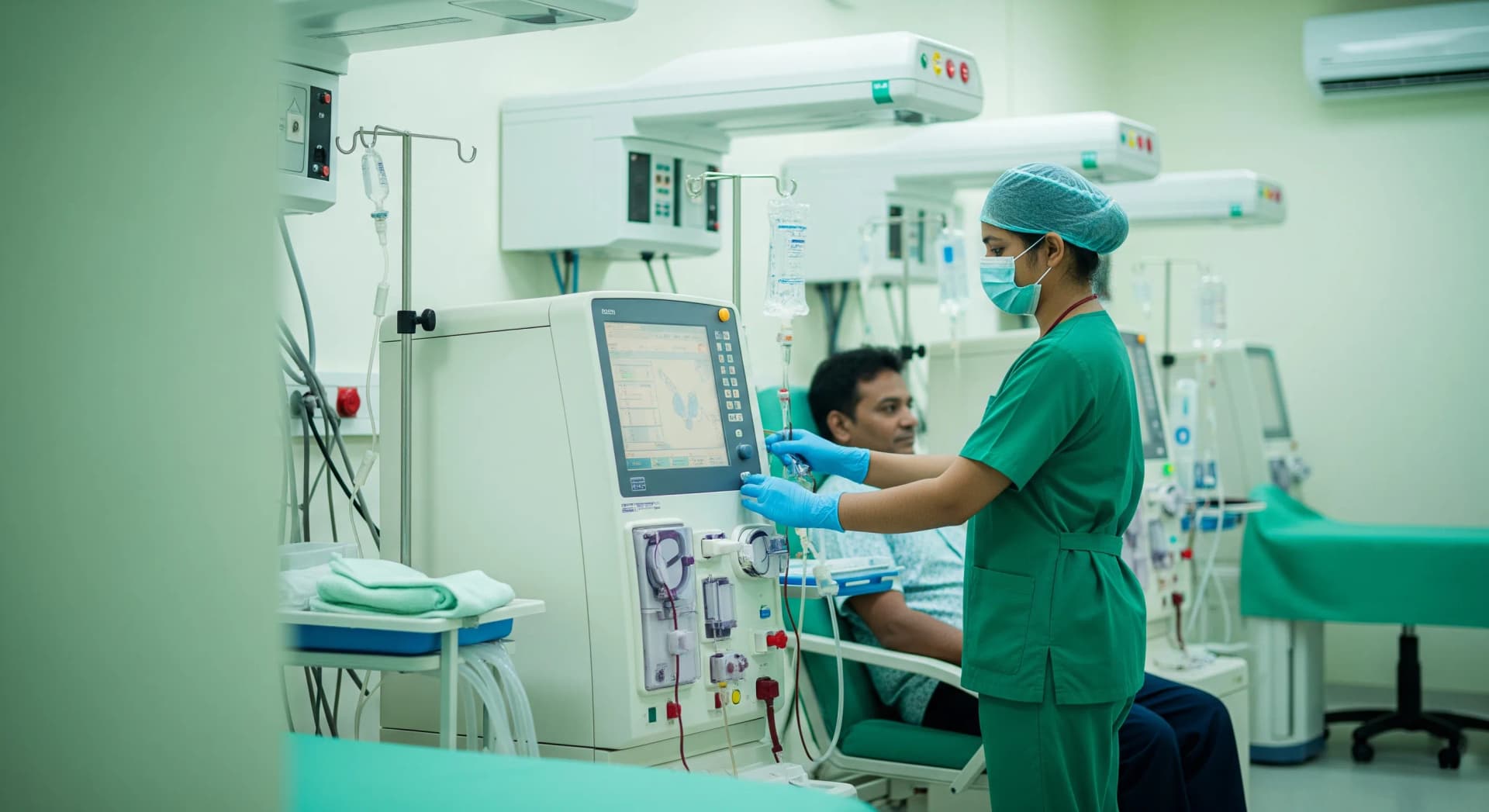
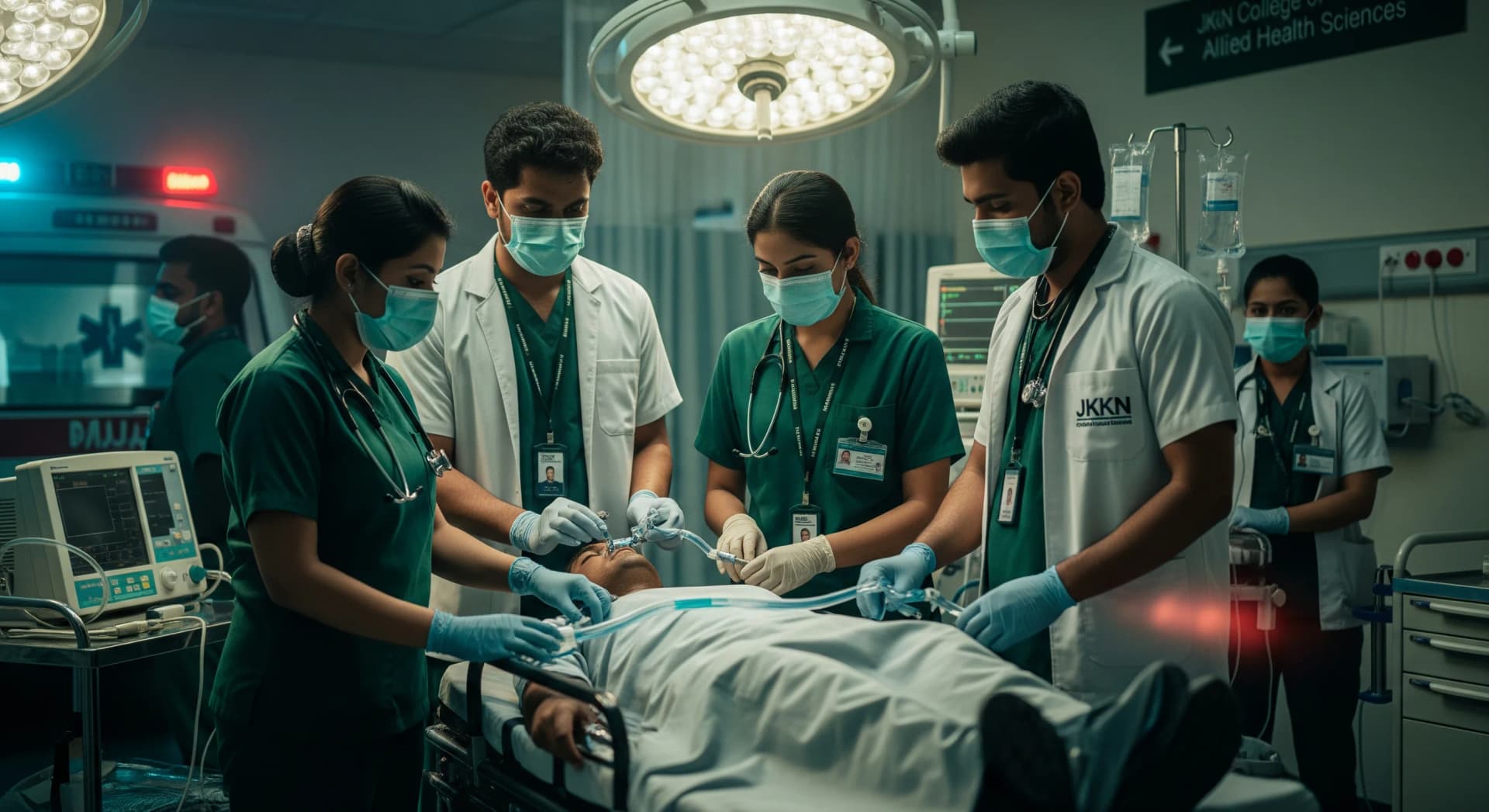
Through the shift you perform initial triage assessments (Indian Triage Scale or ESI), manage trauma resuscitation following ATLS protocols, perform airway manoeuvres, control bleeding with tourniquets and pressure dressings, splint fractures, set up IV lines, operate defibrillators during cardiac arrest, administer prescribed emergency drugs, and assist emergency physicians with procedures (chest tube insertion, central lines, suturing).
On any given day you might handle road accident polytrauma, myocardial infarctions, snake bites, organophosphate poisoning, paediatric seizures, and respiratory failure cases — all in a single shift. Emergency care technologists in 108 ambulance services additionally manage pre-hospital care during transport, often making clinical decisions under time pressure that change patient outcomes.
Career Paths & Specializations
- Hospital ER Technologist — Core entry path. Multi-specialty hospital emergency department staff
- Trauma Centre Specialist — Dedicated trauma centre roles in Level 1 trauma facilities. Highest paying within hospital ER
- 108 / Ambulance Paramedic — Pre-hospital care role with state and private ambulance services. EMT-Basic and EMT-Advanced certifications accelerate growth
- Air Ambulance Medical Crew — ICATT, Aviation Medicine, and corporate aviation health teams. Niche, well paid, requires aviation medicine certification
- Industrial Medical Officer — Oil rigs, mines, manufacturing plants. Excellent pay, often international postings
- Disaster Response Specialist — NDRF, SDMA, international humanitarian organisations
- Emergency Department In-Charge — After 5–7 years, manage ER technician teams, quality compliance, NABH/JCI ER protocols
Salary Outlook in India
| Role & Experience | Tier-1 Corporate | Tier-2 / Government |
|---|---|---|
| Hospital ER Technologist (0–1 years) | ₹2.4 – 4 LPA | ₹2.2 – 3.5 LPA |
| 108 / Ambulance Paramedic | ₹2.6 – 4 LPA | ₹2.4 – 3.8 LPA |
| Mid-level (3–5 years) | ₹4.5 – 7 LPA | ₹4 – 6 LPA |
| Trauma Centre Specialist | ₹6 – 10 LPA | ₹5 – 8 LPA |
| Air Ambulance Crew | ₹8 – 14 LPA | — |
| Industrial Medical Officer (oil rig) | ₹10 – 22 LPA | — |
Skills & Certifications That Multiply Your Value
- BLS + ACLS — Mandatory for all emergency care work
- ATLS (Advanced Trauma Life Support) — Even technician-level ATLS Provider course adds enormous value
- PALS (Paediatric Advanced Life Support) — For paediatric ER and hospital ER tracks
- NIMS / FCCS — Disaster response and critical care care credentialing
- EMT-Basic / EMT-Advanced certification — NHM accredited courses; mandatory for international EMT roles
- Aviation Medicine training — For air ambulance and offshore medical roles
- HAZMAT / Disaster Medicine — NDRF and humanitarian organisation requirements
Global EMT & Pre-Hospital Care Opportunities
- Gulf countries — Saudi (SCFHS), UAE (DHA/HAAD), Qatar (Prometric), Oman, Kuwait — most popular international move for Indian emergency care techs. Salary: ₹15–30 LPA + housing + flights. Roles span hospital ER, oil-rig medical, and pre-hospital services
- United Kingdom — Emergency Care Assistant / Emergency Medical Technician (NHS Band 3-5) via HCPC route or direct NHS recruitment. GBP 22,000–32,000 starting
- Australia — Paramedic roles via additional Bachelor of Paramedicine. AUD 75,000–110,000 starting
- USA — EMT-B and EMT-Paramedic exam pathways. Indian degree counts toward credentialing
- Offshore oil-rig and merchant marine medical roles — Highly paid, work rotation schedules (60 days on / 30 off). Major employers: Shell, ONGC, Reliance, BP, Schlumberger
Why Study at JKKN
- Affiliated with The Tamil Nadu Dr. M.G.R. Medical University, Chennai
- Clinical rotations across multi-specialty hospital ER, trauma centre, and pre-hospital care simulation labs
- Practical training with defibrillators, AED, mechanical ventilators, intubation mannequins, splints, and stretcher equipment
- BLS, ACLS, ATLS Provider preparation track during the final year
- Strong placement record across Apollo ER, KMCH trauma centre, 108 ambulance services, regional multi-specialty hospitals
- On-campus ambulance service, simulation learning labs, on-campus hostel, transport
Read the full B.Sc Accident & Emergency Care Technology learning framework or visit admissions for 2026-27.
Frequently Asked Questions
What is the scope of accident and emergency care technology in India?+
Excellent. India has 4.5 lakh road accident victims yearly, expanding 108 ambulance services, growing trauma centres under PMSSY, and corporate hospitals all hiring emergency care technologists.
What does an emergency care technologist do?+
They handle triage, manage trauma resuscitation, perform BLS/ACLS, manage airway, control bleeding, splint fractures, operate defibrillators, support emergency physicians, and serve as advanced EMTs on ambulances.
What is the salary of an emergency care technologist in India?+
Entry-level: ₹2.4–4 LPA. Mid-level (3–5 years): ₹4.5–7 LPA. Senior emergency care technologists in trauma centres or air ambulance services: ₹7–13 LPA. Gulf and Saudi roles pay 2.5–4× higher.
Where can I work after BSc Accident & Emergency Care?+
Trauma centres (Apollo, Medanta, AIIMS, Christian Medical College Vellore), 108 ambulance services, corporate emergency departments, disaster response teams, oil-rig medical services, air ambulance companies, and ER chains like CARE Hospitals.
Can emergency care technologists work abroad?+
Yes. Gulf countries hire Indian EMTs for hospital emergency departments and oil-field medical services. UK, Australia, and Canada have structured EMT-paramedic pathways after additional certifications.
Ready to start your B.Sc Accident & Emergency Care Technology journey?
JKKN College of Allied Health Sciences offers state-of-the-art learning labs, clinical training in partner hospitals, and placement support. Admissions for 2026-27 are now open.